Why Alt Text Matters
Alt text (alternative text) is a short written description of an image that is read aloud by screen readers and displayed if an image fails to load.
Including alt text:
- Improves accessibility for people who are blind or vision-impaired
- Creates a more inclusive experience for all users
- Meets accessibility standards (such as WCAG guidelines)
- Improves SEO by helping search engines understand your images
Alt text ensures that important visual content is not lost to users who cannot see it.
Alt Text for Art
These guidelines are for visual art and/or fine art photography. I'll address headshots descriptions in the next section.
Avoid redundancy and unnecessary data
Don't start with “Image of…” or “Picture of…” — screen readers already announce that it’s an image. Only include details that matter.
Describe what is essential
Focus on the meaningful content of the image — not every small detail.
Be concise
Usually 1–3 sentences is enough. Complex images may require a bit more, but try not to write more than a single paragraph.
Be accurate
Don’t be dismissive. It’s not enough to write, “a drawing of a cat.” Describe the cat and the context of the image. What is significant about this cat?
Be creative
Alt Text for art can be approached more creatively than for portraits or illustrations. Instead of a literal description of the visual elements, try to convey the overall mood or feeling of the artwork. Try to evoke, more than describe.
Examples
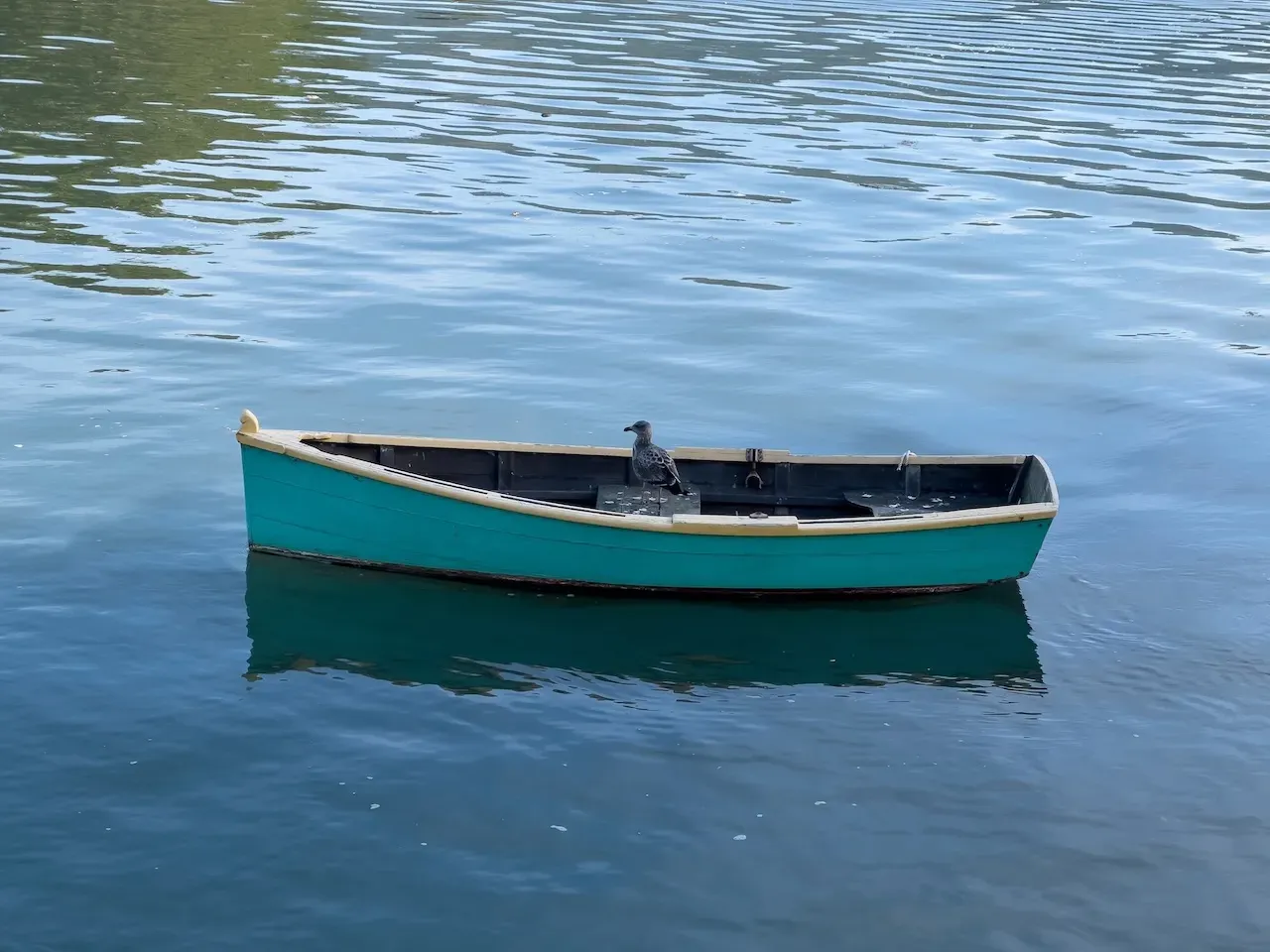
Not Good: A duck in a boat.
Not Bad: A Lone duck sitting in a floating boat.
Better: A lone duck, sitting in portrait, in the middle of a floating green dinghy. The boat appears to be drifting on calm blue water. The mood is surreal and serene.
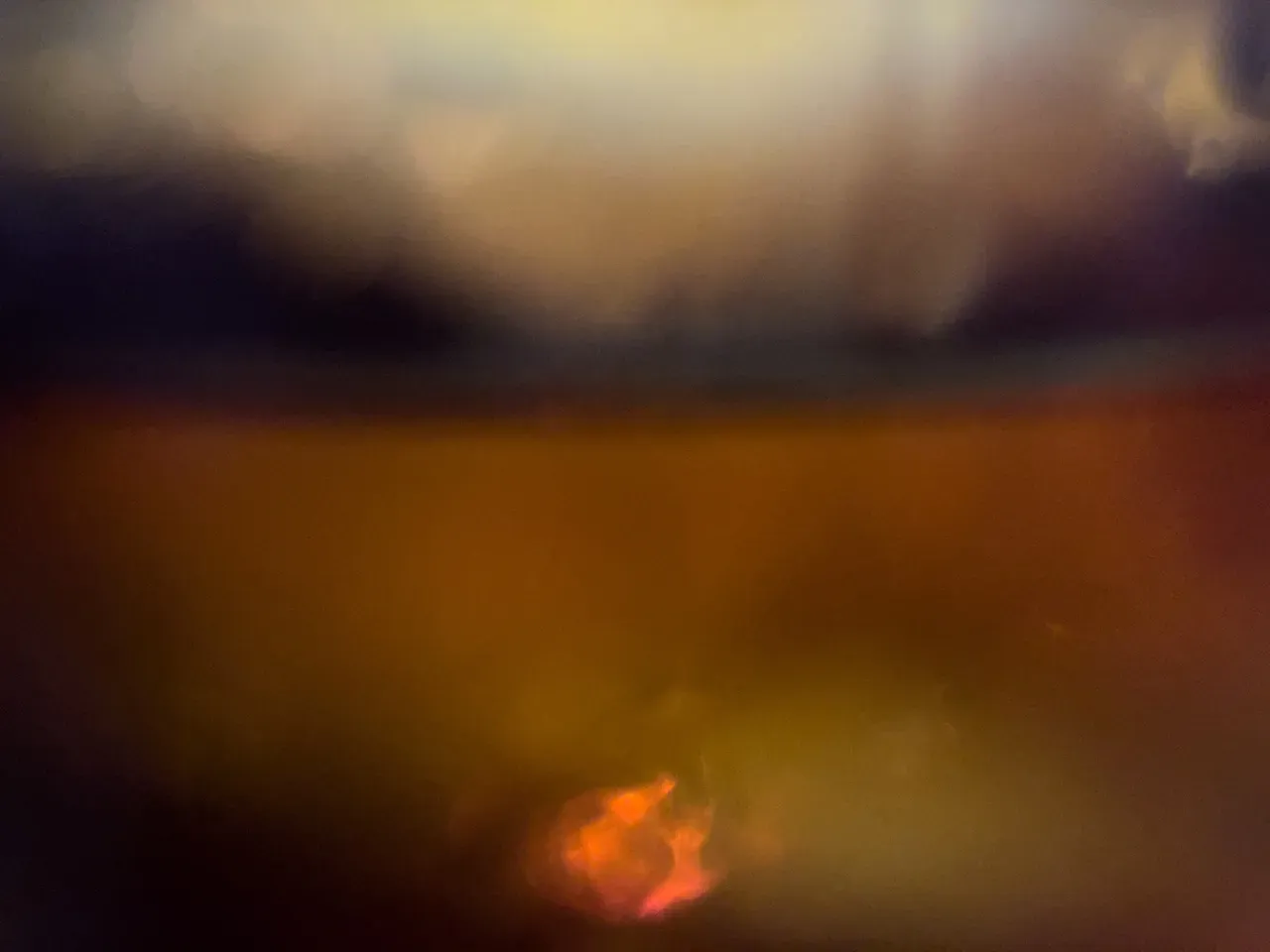
Not Good: An abstract painting of an orange blob.
Not Bad: An abstract image of an orange shape against an indistinct brown background.
Better: An abstract image that suggests a blurred landscape. There is an orange shape at the bottom that may be reflected light on a burnt sienna surface that looks like water. Near the top are dark brown shadow-like shapes that could be mountains, with a small area of dark blue sky peeking through. The mood is of a soft, dream-like, memory.
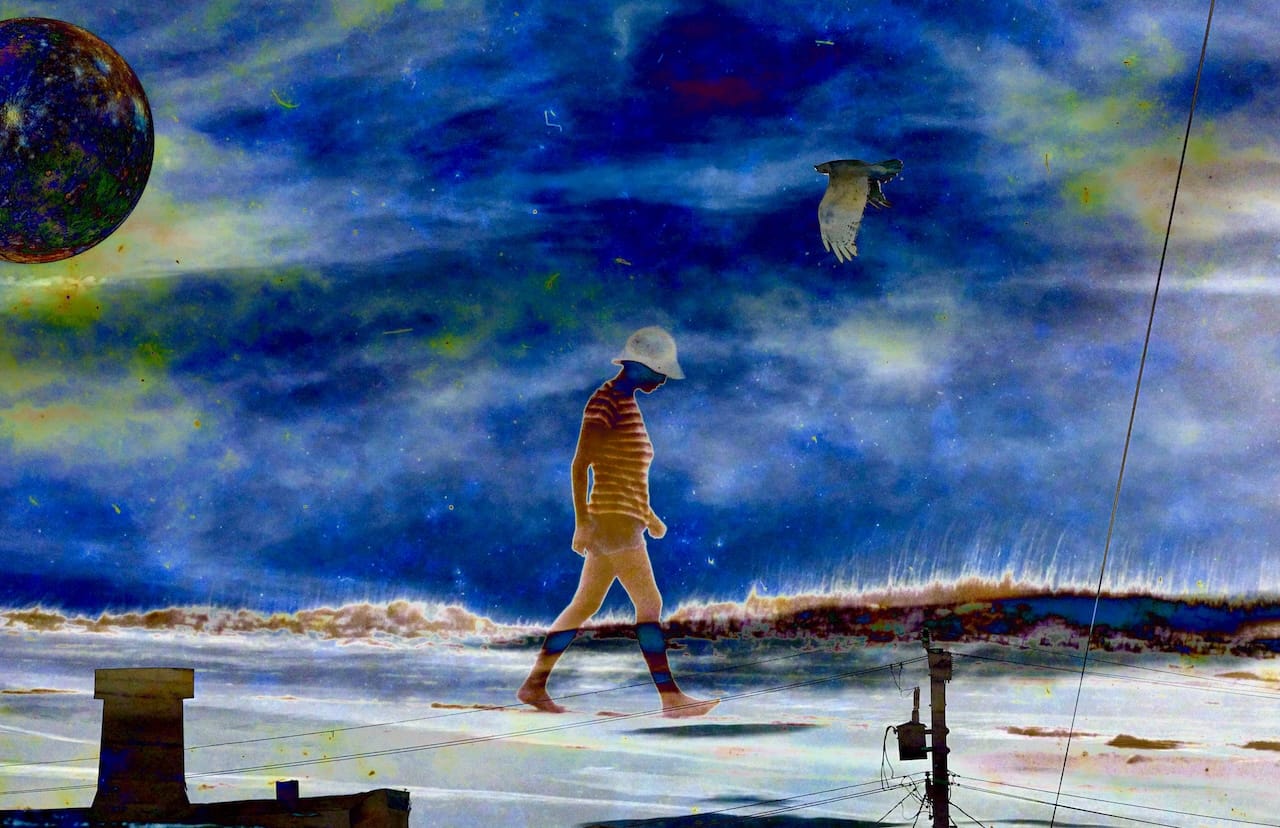
Not Good: A woman walking on a beach.
Not Bad: Montage of a woman walking on a beach with a large planet in a dramatic sky and a bird flying past.
Better: A mysterious montage of a woman walking on a beach with dunes in the distance. Her hat is turned down, covering her eyes. There is a large planet looming in the top left, a bird of prey flying upside down against an eerie alien sky, and parts of a building and telephone pole superimposed across the bottom. The surreal composite image could be the cover image for a sci-fi novel.
Alt Text for Headshots
Writing Alt Text for headshots or portraits can be simpler/easier than for visual artworks. The point is to offer a brief snapshot of the author.
Because headshot descriptions are more personal, the kind and amount of information you want to include is entirely up to you. They may also be written in first, second, or even third person.
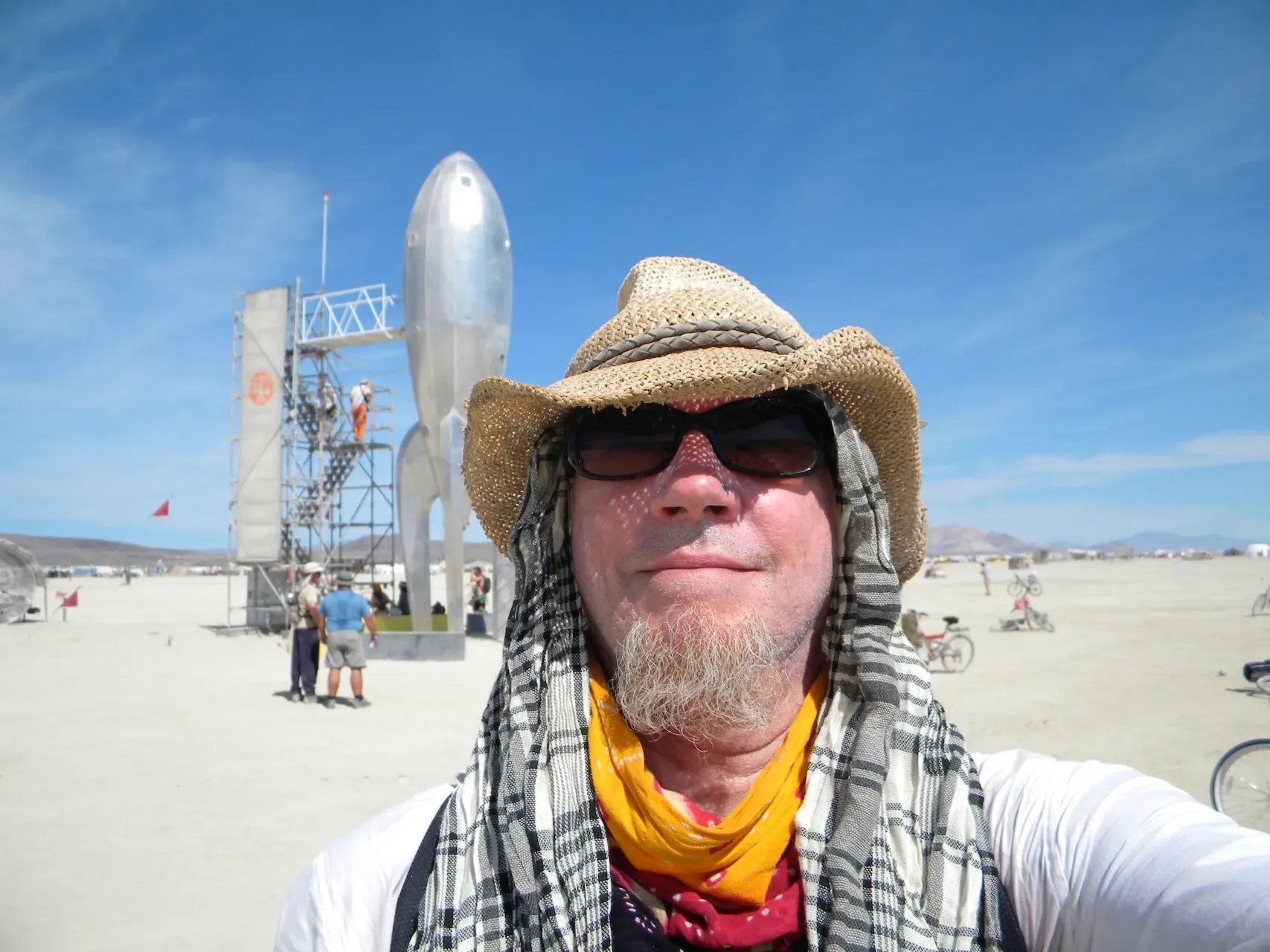
Not Good: Picture of the author at Burning Man.
Not Good: Eric Jennings' Headshot.
Not Bad: Selfie of a male wearing a keffiyeh under a straw hat, with dark glasses, and an orange and yellow bandana around his neck.
Better: A selfie taken on a desert playa, with a rocket ship sculpture in the background against a blue summer sky. I'm a light-skinned male wearing a keffiyeh under a weather worn and floppy straw hat, with dark glasses, and an orange and yellow bandana around my neck. I have a scraggly grey goatee. Despite the sunglasses, I appear to be looking directly into the camera, and I have a slight smirk on my face.
Headshot descriptions are more personal, and the type and amount of information you want to include is entirely up to you. If aspects of your identity are important to you, such as cultural attire, gender appearance, or disability, you might want to include those.
In a nutshell: Imagine if, upon meeting a vision-impaired person, they asked you to briefly describe yourself. What would you say?
Caveat
Admittedly, none of the examples are perfect, and other people may describe them differently. Writing Alt Text is a little more art than science. The point isn't to "get it right." The point is simply to communicate something to the reader.
Perception is subjective, so all you really need to do is describe what you see, including some of what you feel (or want the viewer to feel).
As with anything, the more you write Alt Text, the easier it becomes.
If you're interested in learning more about Alt Text, here are two sites I like:
- Cooper Hewitt Guidelines for Image Description (thorough and technical)
- Alt Text as Poetry (more personal and artsy)
Beware AI
There are a lot of AI Alt Text generators available online. I don't use these, and I hope you won't either. AI can usually describe shapes, objects, and colors, but they cannot detect or assess the emotion in art. Sterile AI language may be suitable for simple illustrations or technical drawings, but it cannot communicate mood or feelings because it is software, not human.